Sky Q is here as the Netflix-style 4K future of Sky TV

Sky has announced one of its most major advancements in the history of the company, Sky Q...

The Incredible Hulk!What is behind him?

Jack Kirby was a witness when a woman...

This insane 85-metre yacht costs £130 million

At 85 meters (278 feet) in length and weighing over 2,900 tons...

Toys R Us at 30: Three decades of top toys

Britain’s biggest toy megastores is celebrating its 30th anniversary – after selling a staggering 3 billion toys to 360 million customers...

Incorrectly flow information for BMW's most powerful car ever

BMW wrongly issued on its website pictures of sports model Seria 7...

Showing posts with label Curiosity. Show all posts

Friday, 22 January 2016

The Incredible Hulk!What is behind him?


Jack Kirby was a witness when a woman moved by the force of arms a car, to draw her child trapped below. He was fascinated by the power that can issue a man, as they violated the most important thing in life, so he was inspired by establishing: The Incredible Hulk!

Sunday, 17 January 2016

What ???!!!!!


Keeping headphones for an hour, increases the bacteria in your ear 100 times.

Saturday, 9 January 2016

Most Expensive Car sold at auctions in 2015


1956 Ferrari 290 MM by Scaglietti — $28,050,000 (RM Auctions, New York City—Driven by Disruption)

Produced specially to compete in the 1956 Mille Miglia, the Ferrari 290 MM was a race car with a storied racing history that included wins at Mille Miglia, the Swedish Grand Prix, and 1,000 km race Buenos Aires. Powering it is a V-12 engine producing 320 hp that was derived from Scuderia Formula 1 cars. 


photos source:
www.youtube.com
www.forbes.com
uncrate.com


Sunday, 27 December 2015

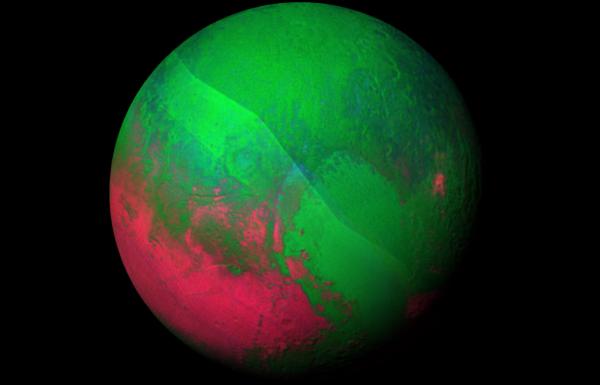
Pluto gets rainbow


It's clear that the New Horizons probe still has a few surprises up its sleeve. NASA has posted both a photo and a video showing how the spacecraft can produce vibrant colors from the seemingly drab-looking dwarf planet. The key is New Horizons' infrared spectrometer. And when researchers plug the results into visible color channels, the result is the almost festive mix of red and green (with hints of blue) that you see.
These images aren't just meant as art, of course. Infrared scans were crucial to confirming the presence of water ice on Pluto.

Saturday, 26 December 2015

3 Interesting Curiosities About The World That Will Blow Your Mind.

DEFORESTATION.About 22% of the earth's original forest coverage remains.Western Europe has lost or so of its primary forests: Asia 94%,Africa 92%,Oceania 78%,North America 66% and south America 54%.Approcimately 45% of the world's tropical forests,originally covering 1.4 billion hectares, have disappeared in the last few decades.


THE WORLD'S LONGEST JOURNEY.The Trans-Siberian Railway offers the world's longest train journey.It takes about 7 days to travel the 5580 miles or 9000 km between Moscow and Vladivostok.


POWER OF  AMAZON RIVER.The Amazon River pushes so much water into the Atlantic Ocean that, more than one hundred miles at sea off the mouth of the river, one can dip fresh water out of the ocean.


photos sources :
www.telegraph.co.uk
 www.tripadvisor.com
rio.wikia.com

Friday, 25 December 2015

The evolution of man's face over the course of 6 million years.It is amaizing :)


source:https://www.youtube.com/watch?v=tQR2mGiRArQ

Wednesday, 9 December 2015

The Worst Movies of 2015?Write your opinion.

Aloha
In addition to making one of the most questionable casting choices of the year, Cameron Crowe abandoned structural integrity when making this film. The dialogue is really awkward.


 AREA 51
It took Oren Peli something like a decade to finish what turned out to be a really bad ripoff of his own "Paranormal Activity." But with aliens. Barely.
- Drew McWeeny


 Bound to Vengeance
This played at Sundance under the title "Reversal,", but whatever it's called, it is a vile, ugly slice of violence against women disguised as an empowerment tale.


By the sea
Turns out that simmering cinematography, an exotic locale, and megawatt star power aren't enough to make a film watchable.


Entourage
 Like herpes, this series is never going away.
- Drew McWeeny


Picture source: Are taken from Warner Bros. Pictures,Universal Pictures,Paramount,Sony Pictures,IFC Midnight

Monday, 30 November 2015

The invention of the wheel.The symbolism

We all know the importance of the wheel.But did you tou know where it cames from???Let's se it.


The invention of the wheel falls in the late Neolithic, and may be seen in conjunction with other technological advances that gave rise to the early Bronze Age. Note that this implies the passage of several wheel-less millennia even after the invention of agriculture and of pottery:
  • 9500–6500 BC: Aceramic Neolithic
  • 6500–4500 BC: Ceramic Neolithic (Halafian), earliest wooden wheels (disks with a hole for the axle)
  • c. 4500 BC: invention of the potter's wheel, beginning of the Chalcolithic (Ubaid period)
  • 4500–3300 BC: Chalcolithic, earliest wheeled vehicles, domestication of the horse
  • 3300–2200 BC: Early Bronze Age
  • 2200–1550 BC: Middle Bronze Age, invention of the spoked wheel and the chariot

Evidence of wheeled vehicles appears from the second half of the 4th millennium BC, near-simultaneously in Mesopotamia (Sumerian civilization), the Northern Caucasus (Maykop culture) and Central Europe, so that the question of which culture originally invented the wheeled vehicle is still unsolved.
The earliest well-dated depiction of a wheeled vehicle (here a wagon—four wheels, two axles) is on the Bronocice pot, a c. 3500 – 3350 BC clay pot excavated in a Funnelbeaker culture settlement in southern Poland.
The oldest securely dated real wheel-axle combination, that from Stare Gmajne near Ljubljana in Slovenia (Ljubljana Marshes Wooden Wheel) is now dated in 2σ-limits to 3340-3030 cal BC, the axle to 3360-3045 cal BC
Two types of early Neolithic European wheel and axle are known; a circumAlpine type of wagon construction (the wheel and axle rotate together, as in Ljubljana Marshes Wheel), and that of the Baden culture in Hungary (axle does not rotate). They both are dated to c. 3200-3000 BC.
In China, the wheel was certainly present with the adoption of the chariot in c. 1200 BC, although Barbieri-Low argues for earlier Chinese wheeled vehicles, c. 2000 BC.


Symbolism

The wheel has also become a strong cultural and spiritual metaphor for a cycle or regular repetition (see chakra, reincarnation, Yin and Yang among others). As such and because of the difficult terrain, wheeled vehicles were forbidden in old Tibet. The wheel in ancient China is seen as a symbol of health and strength and utilized by some villages as a tool to predict future health and success. The diameter of the wheel is indicator of one's future health.
The winged wheel is a symbol of progress, seen in many contexts including the coat of arms of Panama and the logo of the Ohio State Highway Patrol.
The introduction of spoked (chariot) wheels in the Middle Bronze Age appears to have carried somewhat of a prestige. The sun cross appears to have a significance in Bronze Age religion, replacing the earlier concept of a Solar barge with the more "modern" and technologically advanced solar chariot.
The wheel was also a solar symbol for the Ancient Egyptians.
The wheel is also the prominent figure on the flag of India. The wheel in this case represents law (dharma). It also appears in the flag of the Romani people, hinting to their nomadic history and their Indian origins.

Sunday, 15 November 2015

Things You Might Not Know About Niagara Falls


It’s one of the most popular and iconic destinations in both the United States and Canada, but you may not know all of these facts about Niagara Falls.
1. NIAGARA FALLS IS ACTUALLY THREE SEPARATE WATERFALLS.
Straddling the border between the United States and Canada, Niagara Falls consists of the Horseshoe (or Canadian), the American, and the Bridal Veil falls. All three waterfalls originate in the Niagara River, which stretches 36 miles from Lake Erie to Lake Ontario. The Horseshoe Falls are the widest and highest of the three, measuring 2200 feet across with an average drop of 188 feet. The American Falls come in second at 940 feet wide and, due to large boulders at the base, drop between 90 and 120 feet. The smaller Bridal Veil Falls boast a drop that is about the same as the American Falls, but they are only 45 feet wide.
2. IT'S THE BIGGEST WATERFALL IN NORTH AMERICA, BUT NOT IN THE WORLD.
Approximately 3,160 tons of water flow over the Falls every second, working out to about 660 tons over the American and Bridal Veil falls and 2,500 tons at Horseshoe. Niagara Falls is the largest waterfall in North America in terms of both width and volume, but there are nearly 500 waterfalls around the world that are higher, such as the 1600-foot Ribbon Fall in Yosemite.
3. ALL OF THE GREAT LAKES CONNECT TO NIAGARA FALLS. 

Three of the Great Lakes (Superior, Huron, and Michigan) drain into Lake Erie, which in turn drains into the Niagara River. The River then plummets into Lake Ontario via the Falls.
4. THE FALLS ARE FAIRLY YOUNG, GEOLOGICALLY.
The same glacial forces that created the Great Lakes more than 12,000 years ago created the Niagara River and the many features that eventually made up the Falls. Melting glacial ice emptied into the Niagara River, cut across the topography, and gouged out the falls. As geographic wonders go, the falls are still in their infancy. The Appalachians began forming around 500 million years ago, while parts of Mammoth Cave are 10 million years old.
5. A FRENCH PRIEST WAS THE FIRST EUROPEAN TO DOCUMENT THE FALLS. 
In 1604, Samuel de Champlain made the first reference to a waterfall in the area, but his account isn’t very accurate. Because of the inconsistencies in his story, most historians believe that he was passing on what he heard from the native peoples he encountered. The first eyewitness documentation was Father Louis Hennepin, who saw the falls during a 1678 expedition, and later returned to France and published a book, A New Discovery, which documented the overwhelming impression the falls made on him. The word Niagara is probably derived from the Iroquois word Onguiaahra, which means “the strait.”
6. THE NIAGARA FALLS STATE PARK IS THE COUNTRY'S OLDEST.
In 1885 New York Governor David B. Hill signed legislation creating the Niagara Reservation, widely agreed to be the first state park in both New York and the United States.
7. FREDERICK LAW OLMSTEAD HELPED PRESERVE THE FALLS. 
The creator and designer of New York City’s Central Park was enamored with the beauty of Niagara Falls and prepared a report and authored a petition signed by numerous cultural and political figures that urged the state of New York to acquire private land around the falls in order to preserve the natural beauty of the area. He co-founded the Niagara Falls Association in 1883, and after the approval of the Niagara Reservation he became the park’s landscape architect along with his partner, Calvert Vaux.
8. THE FALLS PRODUCE A LOT OF ELECTRICITY.
The first hydroelectric station was built on the Niagara River in 1881, and by 1896 the plant was able to transmit electricity 26 miles away to Buffalo, one of the most important events in the history of alternating current. In 1961, after Congress passed the Niagara Redevelopment Act, the New York State Power Authority opened the Niagara Power Plant. Today the plant generates 2.4 million kilowatts of power and is the fourth largest hydroelectric power plant in the United States.
9. IT'S BEEN A TOURIST DRAW FOR OVER A CENTURY. 
© The completion of the Erie Canal in 1825 made accessing the falls much easier, and by the late 19th century the area had become known as the Honeymoon Capital of the World. Today more than 12 million people visit the Falls and the surrounding areas each summer. Favorite excursions include the Maid of the Mist boat tour, which takes visitors into the basin of Horseshoe Falls, and a trip 175 feet down to the very edge of the Bridal Veil falls.
10. A 63-YEAR-OLD WOMAN WAS THE FIRST PERSON TO PLUNGE OVER THE FALLS.
Over the years around 15 daredevils have attempted the dangerous plummet over the Falls, many in homemade barrels. But the first to attempt it was 63-year-old widow Annie Edson Taylor. Desperately poor, Taylor visited the Falls in 1901, then attempted to become rich and famous by going over Horseshoe Falls in a barrel she designed herself. Horseshoe Falls was a smart choice—the American Falls feature a shorter drop, but the trip would be considerably more dangerous, as the basin is littered with enormous boulders.
On October 24, 1901, at about 4 p.m., the barrel was set adrift in the Niagara River and went over the falls 20 minutes later. Although she survived the plunge, Taylor cautioned “Don’t try it” to other potential daredevils, and she never made the fortune she dreamed of, dying penniless in 1921.
11. HOLLYWOOD HAS LONG LOVED NIAGARA FALLS. 
In 1953 Marilyn Monroe starred in Niagara opposite Joseph Cotten, Jean Peters, and Max Showalter. Monroe and Cotten portray a couple honeymooning at the falls who become entrenched in sex, lies, and murder. The falls also provided the setting for the opening of 1980’s Superman II, and Jim and Pam were married on the Maid of the Mist in a 2009 episode of The Office.

The world’s most colourful places to live in


From one side of the globe to the other, displaying every color of the rainbow, these vibrant neighborhoods are guaranteed to brighten your day.
Colourful scenes from around the world
From one side of the globe to the other, displaying every colour of the rainbow, these vibrant neighbourhoods are guaranteed to brighten your day.

Believe it or not, the colorful houses of this Caribbean town all started from a headache. When the Dutch ruled Curaçao, the governor believed his migraines were a result of the sun reflecting off the buildings’ stark white walls. An official decree commanded residents to paint their homes anything but white, resulting in the beautiful tourist attraction it is today.
Willemstad, Curaçao, Caribbean
Believe it or not, the colourful houses of this Caribbean town all started from a headache. When the Dutch ruled Curaçao, the governor believed his migraines were a result of the sun reflecting off the buildings’ stark white walls. An official decree commanded residents to paint their homes anything but white, resulting in the beautiful tourist attraction it is today.


North America's oldest city, the seaside town is famous for Jellybean Row, which features a cluster of colorful historic houses. There are various stories behind the bright paint job with some claiming they were painted to brighten up the gray surroundings while many say ship captains would assign their homes a distinct candy color to make them easier to spot from the sea.
St John’s, Newfoundland, Canada
North America's oldest city, the seaside town is famous for Jellybean Row, which features a cluster of colourful historic houses. There are various stories behind the bright paint job with some claiming they were painted to brighten up the gray surroundings while many say ship captains would assign their homes a distinct candy colour to make them easier to spot from the sea.


Jam packed with shops, street markets and bright buildings, Little India packs a big punch. Located near the Serangoon River, an influx of Indian immigrants replicated their homeland with colorful buildings and vibrant street food.
Little India, Singapore
Jam packed with shops, street markets and bright buildings, Little India packs a big punch. Located near the Serangoon River, an influx of Indian immigrants replicated their homeland with colourful buildings and vibrant street food.


Salvador was the first capital of Brazil, and the Pelourinho area’s main square was once a place where slaves were punished. Despite its sordid past, it’s now a recognized UNESCO World Heritage Site and as a result underwent a massive restoration process to preserve its pastel-colored 17th- and 18th-century buildings.
Pelourinho, Salvador, Brazil
Salvador was the first capital of Brazil, and the Pelourinho area’s main square was once a place where slaves were punished. Despite its sordid past, it’s now a recognized UNESCO World Heritage Site and as a result underwent a massive restoration process to preserve its pastel-coloured 17th- and 18th-century buildings.


Like many of the colorful coastal towns on this list, legend has it that fishermen on the island of Burano began painting their homes in vibrant shades so they could see them in thick fog and avoid crashing into the shore after a voyage at sea. These days, residents must adhere to a strict color scheme by lodging an application with government before doing any renovations.
Burano, Venice, Italy
Like many of the colourful coastal towns on this list, legend has it that fishermen on the island of Burano began painting their homes in vibrant shades so they could see them in thick fog and avoid crashing into the shore after a voyage at sea. These days, residents must adhere to a strict color scheme by lodging an application with government before doing any renovations.


These brightly-colored houses hark back to the early 17th century where timber kits were sent up from mainland Scandinavia. Each color represented the building’s function. Commercial houses were red, hospitals were yellow, police stations were black, fish factories were blue and the telephone company was green. These days, locals like to combine the old tradition with modern colors like pink, purple and orange.
Ilulissat & Nuuk, Greenland
These brightly-coloured houses hark back to the early 17th century where timber kits were sent up from mainland Scandinavia. Each colour represented the building’s function. Commercial houses were red, hospitals were yellow, police stations were black, fish factories were blue and the telephone company was green. These days, locals like to combine the old tradition with modern colours like pink, purple and orange.


This blue-collar neighborhood, or barrio, features every color of the rainbow. The bright buildings are made from different scrap materials from shipyards and apparently were painted using leftover paints from the ships that brought immigrants to the area to remind them of home.
La Boca, Buenos Aires, Argentina
This blue-collar neighbourhood, or barrio, features every colour of the rainbow. The bright buildings are made from different scrap materials from shipyards and apparently were painted using leftover paints from the ships that brought immigrants to the area to remind them of home.


The Old Town of Stockholm was founded way back in 1252. Fortunately, the winding cobblestone streets and Medieval buildings in shades of red and gold still stand, with the addition of some newer paintjobs in shades of green and orange.
Gamla Stan, Stockholm, Sweden
The Old Town of Stockholm was founded way back in 1252. Fortunately, the winding cobblestone streets and Medieval buildings in shades of red and gold still stand, with the addition of some newer paintjobs in shades of green and orange.


Built in the 17th and 18th centuries, the brightly colored houses that line Nyhavn’s canal are a popular tourist spot. But they were originally home to the city’s poor and rowdy pubs which were frequented by drunk sailors and prostitutes.
Nyhavn, Copenhagen, Denmark
Built in the 17th and 18th centuries, the brightly coloured houses that line Nyhavn’s canal are a popular tourist spot. But they were originally home to the city’s poor and rowdy pubs which were frequented by drunk sailors and prostitutes.


Set amid rocky coastal cliffs, the stunning Cinque Terre is made up of five fishing villages: Monterosso al Mare, Vernazza, Corniglia, Manarola, and Riomaggiore. It’s said the houses were painted in various pastel shades so fishermen working offshore could easily see their homes.
Cinque Terre, Italy
Set amid rocky coastal cliffs, the stunning Cinque Terre is made up of five fishing villages: Monterosso al Mare, Vernazza, Corniglia, Manarola, and Riomaggiore. It’s said the houses were painted in various pastel shades so fishermen working offshore could easily see their homes.


This UNESCO World Heritage city was founded in 1559 and became the world’s leading silver-extracting area in the 18th century. As a result, colonial-style homes reflective of that era shot up around the various mines. In an effort to give the city more soul, the miners painted the homes, etched into the rocky ravine, in vibrant and colorful hues.
Guanajuato, Mexico
This UNESCO World Heritage city was founded in 1559 and became the world’s leading silver-extracting area in the 18th century. As a result, colonial-style homes reflective of that era shot up around the various mines. In an effort to give the city more soul, the miners painted the homes, etched into the rocky ravine, in vibrant and colourful hues.


In the mid-1850s around 50,000 Victorian- and Edwardian-style homes were built in the Bay Area. To accentuate their architectural details, they were painted in hues of red, yellow and orange. The most visited spot is the so-called Painted Ladies.
San Francisco, California
In the mid-1850s around 50,000 Victorian- and Edwardian-style homes were built in the Bay Area. To accentuate their architectural details, they were painted in hues of red, yellow and orange. The most visited spot is the so-called Painted Ladies.


Located beneath the peaks of the Rif Mountains the village is a labyrinth of turquoise alleys. The distinctive colors date back to the 15th century when Jewish refugees settled in the area, bringing with them their tradition of painting things blue to mirror the sky and remind them of God.
Chefchaouen, Morocco
Located beneath the peaks of the Rif Mountains the village is a labyrinth of turquoise alleys. The distinctive colors date back to the 15th century when Jewish refugees settled in the area, bringing with them their tradition of painting things blue to mirror the sky and remind them of God.


Spread across a series of hillsides overlooking the Pacific coast, the historic port city is home to clusters of colorful 19th century homes. The town has a strong art culture encouraging local artists to use the buildings as their canvas with the best street artists paid for their work.
Valparaiso, Chile
Spread across a series of hillsides overlooking the Pacific coast, the historic port city is home to clusters of colourful 19th century homes. The town has a strong art culture encouraging local artists to use the buildings as their canvas with the best street artists paid for their work.


Established in 1521, San Juan is the second-oldest European-founded settlement in the Americas. The vibrant buildings date back to the 16th century when Puerto Rico was in Spanish possession. It’s famous for its blue cobblestone streets which were shipped over from Spain. In 1983, the area was named a UNESCO World Heritage Site.
Old San Juan, Puerto Rico
Established in 1521, San Juan is the second-oldest European-founded settlement in the Americas. The vibrant buildings date back to the 16th century when Puerto Rico was in Spanish possession. It’s famous for its blue cobblestone streets which were shipped over from Spain. In 1983, the area was named a UNESCO World Heritage Site.


The capital of Albania was once nothing more than a cluster of gray, drab, communist buildings. These days you can’t help but smile when visiting the now vibrant and thriving city. In an effort to raise people’s spirits, former artist turned mayor of Tirana Edi Rama has given the city’s buildings a bright and bold makeover.
Tirana, Albania
The capital of Albania was once nothing more than a cluster of gray, drab, communist buildings. These days you can’t help but smile when visiting the now vibrant and thriving city. In an effort to raise people’s spirits, former artist turned mayor of Tirana Edi Rama has given the city’s buildings a bright and bold makeover.


Talk about opulence – in 1853 ruler Maharaja Sawai Ram Singh had the whole city painted pink for a visit from Edward, Prince of Wales, the future king of England. To this day the Rajasthani capital retains its signature rose-tinted hue across historic buildings, homes and shops.
Jaipur, India
Talk about opulence – in 1853 ruler Maharaja Sawai Ram Singh had the whole city painted pink for a visit from Edward, Prince of Wales, the future king of England. To this day the Rajasthani capital retains its signature rose-tinted hue across historic buildings, homes and shops.


For most of its history, this small Spanish town in the province of Malaga was simply a whitewashed village. Then in 2011 Sony execs painted the houses blue for a publicity stunt to promote The Smurfs movie. Afterwards, Sony offered to paint the town back, but the 221 citizens of Juzcar voted to keep it blue.
Juzcar, Spain
For most of its history, this small Spanish town in the province of Malaga was simply a whitewashed village. Then in 2011 Sony execs painted the houses blue for a publicity stunt to promote The Smurfs movie. Afterwards, Sony offered to paint the town back, but the 221 citizens of Juzcar voted to keep it blue.

Wednesday, 11 November 2015

How To Make A Smartphone-Powered Hologram


Smartphone Hologram
Photograph by Bryan Edwards
Holograms aren’t just for droids and dead rappers. You can make your own with a piece of transparency paper and a four-sided hologram video. Properly folded, the transparency will combine the images on a phone or tablet screen to create “a reflection that gives you the illusion of an object hovering in space,” says Alex Cronin, a physicist at the University of Arizona.

Make the Hologram

Stats

  • Time: 10 minutes
  • Cost: $0.30-$1
  • Difficulty: Easy

Tools and Materials

  • Sheet of transparency paper
  • Pencil, pen, or marker
  • Ruler
  • Compass
  • Scissors
  • Smartphone or tablet

Instructions

©
Hologram Template
Levi Sharpe
Use this template to fold the transparency paper into a prism. Cut along the solid black lines and crease along the red lines.
  1. Copy the online template onto the transparency, with a radius of 4 inches or more.
  2. Cut along the solid black lines, and crease along the red lines.
  3. Tape the two opposite sides together to make a prism.
  4. Open a four-sided hologram video on your smartphone or tablet. We have one of these videos below, and you can find more by searching for "hologram video" (this is a particularly fun one).
  5. Place the small opening of the prism in the video’s center. Look through the side.

Instructions—Without a Template

No printer for the template? No problem!
  1. Use a compass and pen to draw a circle with at least a 4-inch radius on the transparency paper. Cut it out with scissors.
  2. Mark five dots around the circle, each the radius’ distance apart, and use a ruler to draw a line connecting them.
  3. Cutting along the lines, discard the rounded edges and the remaining third of the circle.
  4. Fold the trimmed transparency in fourths to make four separate equilateral triangles. Cut off their tips about an inch from the bottom and tape the two opposite sides together to make a prism.
  5. Open a four-sided hologram video on your smartphone or tablet. We have one of these videos below, and you can find more by searching for "hologram video" (this is a particularly fun one).
  6. Place the small opening of the prism in the video’s center. Look through the side.

More Optics Hacks

A smartphone can perform other optical tricks. Harvest a focus lens from a laser pointer, and attach it to the phone’s camera with some wire. The lens will magnify images to make a DIY microscope (full instructions here). Or stick a few pieces of clear tape over the flash, and color them with blue and purple Sharpie markers. This filter blocks out most visible light and leaves only the ultraviolet spectrum, turning the phone's flashlight function into a blacklight (full instructions here).

This article was originally published in the November 2015 issue of Popular Science, under the title "Smartphone Hologram."